Which D-Day Beaches to Visit in Normandy: American, British or Canadian
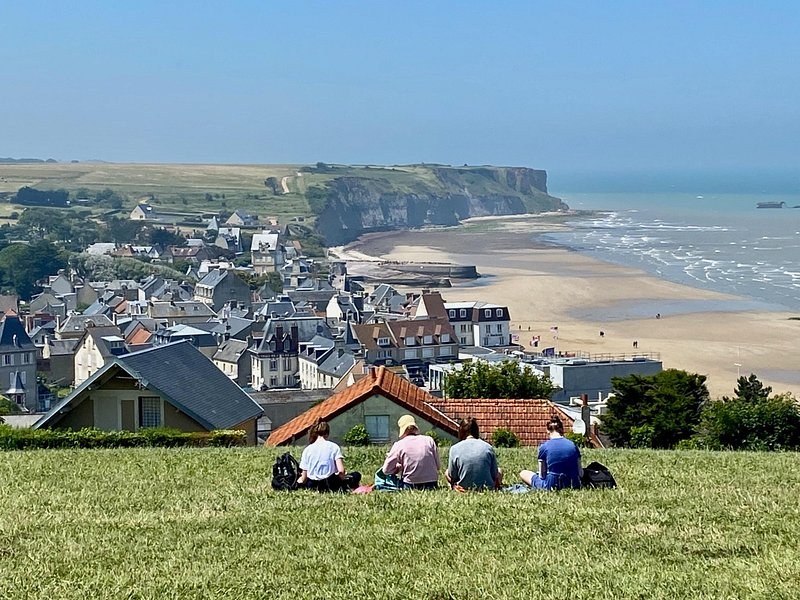
This guide decides one thing: which stretch of coast your day should cover. The Normandy beach tours you can book mostly spend their day in the American sector, and the landing coast is longer than one day. Pick your sector first, then the tour that covers it. The history of each beach, west to east, is on the beaches from west to east.
The short answer: for an American family story, Omaha Beach, the Rangers' cliff and the cemetery, with Utah Beach on a full day. For a Canadian one, Juno and the Canadian day from Paris. For a British one, Arromanches and Gold, which few tours cover, so plan part of the day yourself.
Which nations landed on which beach?
The Allies landed on five beaches on 6 June 1944. From west to east they are Utah, Omaha, Gold, Juno and Sword. American troops came ashore on Utah and Omaha, British troops on Gold and Sword Beach, and Canadian troops on Juno, all from 0630 that morning. Before dawn, the American 82nd and 101st and the British 6th Airborne Divisions had landed inland by parachute and glider. The American Battle Monuments Commission counts six divisions from the three nations on the beaches that morning.
In 2026 UNESCO inscribed the landing beaches as a World Heritage site. The listing has six parts along about 80 km of coast: the five beaches and Pointe du Hoc, the clifftop west of Omaha that the Rangers climbed. It also names the remains of the Mulberry harbour at Arromanches, the German Atlantic Wall and the American Cemetery at Colleville among what it protects.
What stands in the American sector?
Most of what the day tours visit, and it is where almost every one of them goes. Here is the sector from west to east.
- Utah Beach. The US 4th Infantry Division landed here and moved inland quickly. The Utah Beach Museum charges €10 for an adult; allow 1.5 to 2 hours. Inland, the village of Sainte-Mère-Église has the Airborne Museum, at €11.50.
- The Rangers' cliff. The US 2nd Ranger Battalion climbed 100-foot cliffs to reach the German guns, which had been moved inland; they found and destroyed them. Only about 90 Rangers were still standing when relief came two days later.
- Omaha Beach. The US 1st and 29th Infantry Divisions met heavy resistance across open sand and steep bluffs. American forces suffered over 4,000 casualties here, the most of the five beaches.
- The cemetery. The Normandy American Cemetery above Omaha holds 9,389 graves on 172.5 acres, with 1,557 names on the Walls of the Missing. It is free and open daily from 9 am to 5 pm.
Two more stops appear on many days: the Overlord Museum, 500 m from the cemetery, at €9.90, and the German war cemetery at La Cambe, free to enter.
What is there on the British beaches?
Arromanches stands on the Gold coast, where the remains of the artificial harbour are still visible. The museum there opened on 5 June 1954, the first museum of the landings, and charges €12.90 for an adult; a visit takes about an hour and a half. Its story is how 600 businesses and 50,000 people built a floating harbour in secret to land supplies day and night.
Nearby, the battery at Longues-sur-Mer still has four concrete casemates with their original guns. It is free, open all year, and takes about 30 minutes. Sword is the easternmost beach, and no tour here is built round it.
What is there on the Canadian beach?
Juno is Canada's beach. At Courseulles-sur-Mer, the Juno Beach Centre calls itself Canada's Second World War museum. It opened in 2003, charges €9 for an adult and shuts in January. Its figures put the cost plainly: 45,000 Canadians died in the war, 5,500 in the Battle of Normandy and 381 on D-Day itself.
The Canadian day from Paris adds the Canadian war cemetery at Bény-sur-Mer, Hell's Corner and the Abbaye d'Ardenne, all places the American days never reach.
Can one day cover all five beaches?
Not well. The coast from Utah to Sword runs about 80 km, and each site deserves an hour. A full day from Bayeux spends five to six and a half hours at the sites and covers five or six stops, nearly all American. The train day from Paris makes 30-minute stops from Utah to Arromanches, which is the widest sweep on offer, but half an hour is short at a cemetery.
If you want two sectors, take two days. Our three-day plan shows how to fit them round a base in Bayeux.
Which tours cover which beaches?
This table sums up where each kind of day goes, west to east.
| Beach | Who landed | What stands there | Days that stop there |
|---|---|---|---|
| Utah | American | The Utah Beach Museum; the paratroopers' village inland | Bayeux full days, the coach days from Paris, the train day |
| The Rangers' cliff | American | Craters, bunkers, the Rangers' monument | Almost every day, when the works allow |
| Omaha | American | The cemetery above it; the Colleville museum nearby | Almost every day, half or full |
| Gold | British | Arromanches and its harbour remains | The train day and the VIP day |
| Juno | Canadian | Canada's war museum at Courseulles | The Canadian day from Paris |
| Sword | British | The easternmost beach | No tour here |
The D-Day landing tours in Normandy list every day that starts in Normandy, and the Normandy tours from Paris list the rest.
Which beaches should you choose if your family history is American?
Start with Omaha Beach and the cemetery above it, then the Rangers' cliff. Every half day from Bayeux covers those three, from $107. If your relative served with the airborne or the 4th Infantry Division, take a full day that adds Sainte-Mère-Église and Utah Beach, from $154.
If you are looking for a grave, plan ahead. Since July 2026 the burial plots have been closed while water is restricted, and relatives are asked to contact the staff in advance or on arrival. The post on the cemetery zone by zone covers the rest.
Which beach should you choose if your family history is Canadian?
Juno, and the day that goes there. The Canadian day from Paris costs $273 and puts the entrance fees in the fare. It leaves Ternes at 7 am in a minibus of eight and takes 13 hours. If you are already in Normandy, you can reach Courseulles on your own; the museum's guided bunker tour runs from April to October.
Which beach should you choose if your family history is British?
Gold and Arromanches, then Sword. No day here is built round the British beaches, so choose between two routes. The private VIP day from Paris follows a route you can shape and spends an hour at Arromanches. Or stay in Bayeux, take a half day on the American beaches, and spend a second day at Arromanches and Longues on your own; our guide to the beaches without a tour covers the car and the parking.
Is the Rangers' cliff open during the 2026-27 works?
Yes, from 9 am to 5 pm every day. The American Battle Monuments Commission is rebuilding the site from February 2026 to mid-2027. The visitor center has been closed since 9 March 2026, and since mid-May you reach the cliff by the west path only, with limited parking. It is not wheelchair accessible during the works.
If the cliff is shut on your day, the four-hour half day from Place du Québec swaps in the battery at Longues-sur-Mer. On other days, ask your operator what they do instead.
Where do most visitors go?
To the cemetery above Omaha. It is the most visited of the American war cemeteries abroad, with over a million visitors a year. In summer 2026 its staff ran free guided tours daily, in English at 11 am and 2 pm, from the overlook. Early June brings the anniversary crowds, so arrive early then; the best time to visit shows the quieter months.
Wherever you go, allow time at the cemetery itself. The memorial, the chapel, the Garden of the Missing and the visitor center all stay open while the plots are closed, and the overlook above the beach is where the free tours begin.
Frequently asked questions
Which D-Day site do most visitors see?
Which D-Day beaches do the tours visit?
Can I see all five D-Day beaches in one day?
Is there a Canadian D-Day tour?
Is there a tour of the British beaches?
Can I walk from the American Cemetery down to Omaha Beach?
How much are the D-Day museums?
Tours for the beach you choose
Small-Group Canadian Normandy D-Day Juno Beach from Paris
Thirteen hours from Paris to the Canadian beach: its museum with entrance fees paid, the Canadian cemetery at Bény-sur-Mer and the Abbaye d'Ardenne. Eight seats.
From $273 per person
Check Availability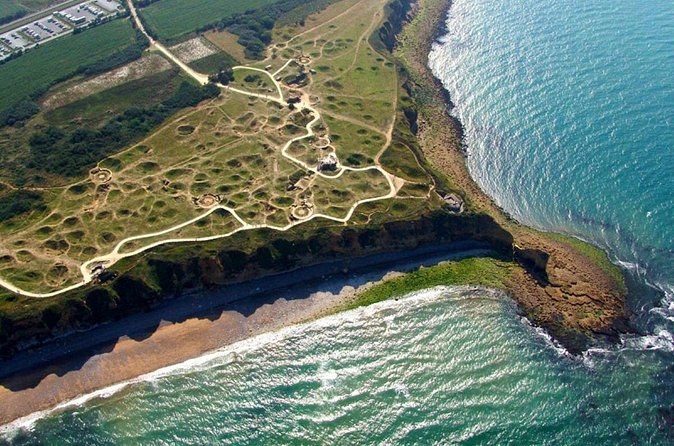
Normandy American D-Day Beaches Full Day Tour from Bayeux
Nine hours from Place du Québec to the American sector, Utah to Omaha, with a stop to buy lunch. Children from five; strollers and infant seats available.
From $162 per person
Check Availability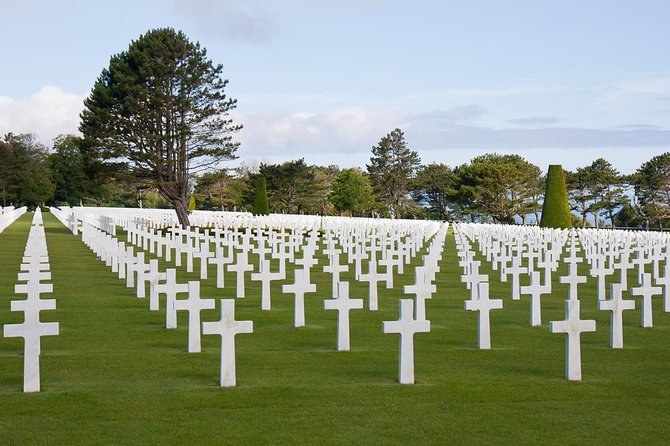
Normandy D-Day Tour From Paris
A train from Paris to Bayeux with the rail tickets in the fare, then a guided day of short stops from Utah to Arromanches. Final sale; ages 14 and over.
From $480 per person
Check AvailabilityNext: Picked your sector? Fit it into three days with the itinerary guide. Every fare sits side by side on Normandy Tours.