The American Cemetery in Normandy: the Memorial, the Graves and the Visitor Center
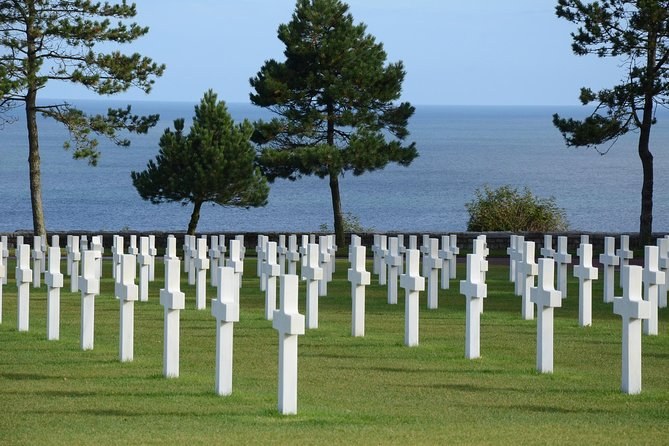
The short answer. Allow at least an hour, and two if you can. Start at the visitor center, walk to the memorial and the orientation table above the beach, then along the reflecting pool into the rows of graves and on to the chapel. Entry is free, from 9 am to 5 pm daily. Since July 2026 the grave plots have been closed for a time, so check the notice first. The Normandy guided tours that stop here give it 45 minutes to two hours.
What you are visiting
The Normandy American Cemetery sits on a bluff at Colleville-sur-Mer, above Omaha Beach, at the north end of a half-mile access road. It grew from the temporary St. Laurent Cemetery, which the US First Army opened on 8 June 1944, two days after the landings: the first American cemetery on European soil in the Second World War. It was dedicated in 1956.
Today it covers 172.5 acres and holds 9,389 graves, most of them of men who died in the landings and the fighting that followed. Three Medal of Honor recipients are buried here, and 45 sets of brothers lie side by side. More than a million people visit every year, which makes it ABMC's most visited cemetery. The D-Day beaches page places it among the other sites on the coast.
Plan the visit: the zones at a glance
| Zone | What is there | Allow |
|---|---|---|
| Visitor center | The story of D-Day and the campaign, in exhibits and film | 30 to 60 minutes |
| Memorial and orientation table | Colonnade, maps, the bronze statue, the view over the beach | 15 minutes |
| Garden of the Missing | 1,557 names on curved walls | 10 to 15 minutes |
| Reflecting pool and graves | The long view west and the rows of headstones | 20 minutes or more |
| Chapel and statues | The ceiling mosaic; the two granite figures at the far end | 10 minutes |
The visitor center
Begin here. The center opened on 6 June 2007, the 63rd anniversary of D-Day, in woodland about 100 metres east of the Garden of the Missing. Its exhibits explain the landings and the campaign for Normandy that followed, which turns the rows outside from a view into a story. If you arrive with a guide, you may walk the grounds first; on your own, the center is the better start.
The memorial and the view over the beach
The memorial is a semicircular colonnade. A loggia at each end holds large maps and narratives of the military operations, worth ten minutes if you want to see where each division came ashore. At the centre stands a bronze statue, the Spirit of American Youth Rising from the Waves. In front of it, an orientation table looks out over the beach and traces the landings below you. Stand there before you walk on: it is the one place where the shore, the bluff and the graves line up.
The Garden of the Missing
East of the memorial, a semicircular garden holds the Walls of the Missing, carved with 1,557 names of men whose remains were not found or identified at the time. Look for the small rosettes beside some of the names. Each marks a man who has since been recovered and identified, and it is the detail most visitors walk straight past.
The reflecting pool and the graves
Face west from the memorial and the reflecting pool runs away from you, with the burial area beyond. The headstones stand in long, regular rows under the trees. In a normal season you can walk among them. Since ABMC's notice of 28 July 2026, the plot areas are closed for a time because of drought and water restrictions; relatives can ask staff for access to a grave, on arrival or in advance.
The chapel and the statues at the far end
A small circular chapel stands at the centre of the burial area. Inside, a ceiling mosaic shows America blessing the sons who leave to fight for freedom. At the far western end, two granite statues represent the United States and France. If the plots are closed, you see both from the paths.
Four details most visitors miss
- The rosettes on the Walls of the Missing, each a soldier since found and named.
- The brothers: 45 pairs lie side by side; a guide or the staff can point some out.
- Three Medal of Honor graves, among the 9,389.
- The loggia maps at each end of the colonnade, which show where every division landed and make sense of the view from the orientation table.
Hours, guided walks and the flag
- Hours: 9 am to 5 pm every day except 25 December and 1 January, with last admission 30 minutes before closing. Entry is free and needs no booking.
- Free guided walks: in summer 2026 ABMC ran them daily in English at 11 am and 2 pm and in French at 11 am and 3 pm, from the Overlook, with no reservation. Check whether they are running before you plan round one.
- The flag lowering: held one hour before closing, every day the cemetery is open.
- The beach: the path down from the cemetery has been closed since 2016 for security, and public beach access is nearby.
How to behave, and what to bring
This is a military cemetery, and visitors keep their voices low. Stay on the paths when the plots are closed, keep children close, and treat the grounds as the families of the men buried here would want. Bring a layer: the bluff is exposed, and the coast is windy for much of the year. The weather by month shows how often it rains, and the visitor guide covers the museums nearby, including the Overlord Museum a short walk from the gate.
How the day tours use the cemetery
Almost every day on the American sector ends here, and the time varies more than the price. The shortest stops run about 45 minutes; the coach day from Paris gives it an hour and a quarter, and the afternoon from the Caen museum the same. A private car gives it two hours. On your own you set your own time, but you need a car to reach it. The D-Day remembrance tours in Normandy page sets these days side by side.
Next, read how to plan a first visit to the beaches, or the facts behind the landings.
Days that give the cemetery time
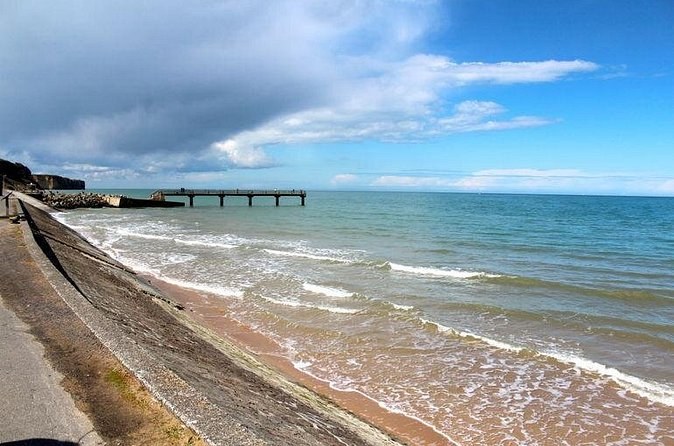
Normandy Beaches Half-Day Afternoon Trip from Bayeux (A2)
An afternoon from selected Bayeux hotels: Omaha Beach, the Rangers' cliff and the American war cemetery, about an hour at each. Eight seats; refunds up to six days ahead.
From $107 per person
Check Availability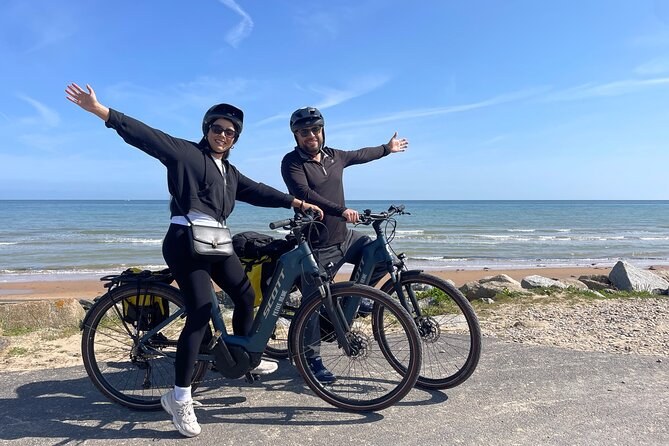
Normandy Guided E-bike tour to Omaha Beach / private tour
A private half day on electric bikes from Bayeux to Omaha Beach, with an hour at the American war cemetery. Helmet, water and snacks in the fare.
From $219 per person (minimum 2)
Check Availability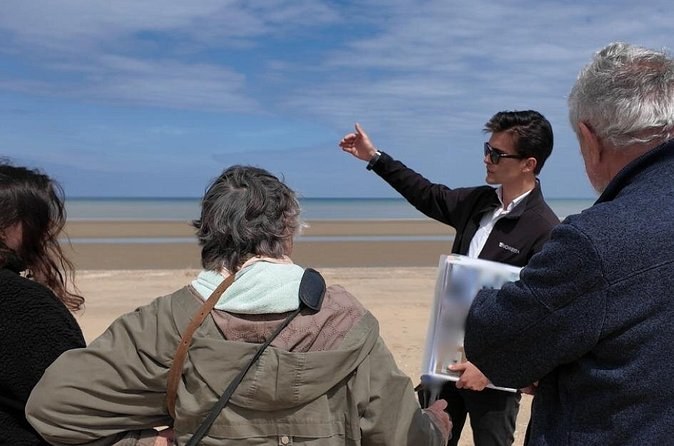
Normandy: Private Tour of the D-Day Beaches (American Sector)
A private car from your hotel in Bayeux or Caen for up to seven, with two hours at the American war cemetery and an hour each at the beaches and the cliff.
From $986 per group of up to 7
Check AvailabilityNext: Choose a day that gives the cemetery at least an hour, and arrive knowing the 2026 notice. Every fare sits side by side on Normandy Tours.