Normandy’s D-Day Beaches: Utah to Sword, and Pointe du Hoc
Hours, prices and access verified by the Normandy Tours team — last checked 2026-09-28.
The D-Day beaches of Normandy run along about 80 km of the Channel coast. Five
beaches and one clifftop were stormed on 6 June 1944, and in 2026 UNESCO listed all six as World
Heritage. Here is what happened at each, what you find there now, and which of the
normandy beach tours reach it.
Six sites on one UNESCO listing
UNESCO added the Beaches of the D-Day Landings to its World Heritage List in 2026. The listing
covers six places, west to east: Utah, Pointe du Hoc, Omaha, Gold, Juno and Sword. Pointe du Hoc
counts as "the sixth amphibious assault site", because Rangers landed below its cliffs.
The listing also names what still stands along the coast. That means the remains of the
Mulberry harbour at Arromanches, and pieces of the German Atlantic Wall: casemates, batteries and
strongpoints. It names the memorial landscapes too, including the Normandy American Cemetery at
Colleville-sur-Mer.
Operation Neptune, the landing phase of Operation Overlord, began on 6 June 1944. By UNESCO's
count, seventeen Allied nations worked together on it. Before dawn, the U.S. 82nd and 101st and
the British 6th Airborne Divisions dropped inland by parachute and glider. From 6:30 am, six
U.S., British and Canadian divisions landed from the sea.
Utah Beach
The westernmost landing. The U.S. 4th Infantry Division landed here and moved quickly inland. The Utah Beach D-Day Museum stands on the site.
Pointe du Hoc
The sixth assault site: a headland between Utah and Omaha. Rangers climbed its cliffs under fire. Its bomb craters are still there.
Omaha Beach
The bloodiest of the five landings. Open sand and steep bluffs cost American forces over 4,000 casualties. The cemetery sits on the bluff above it.
Gold Beach
A British beach. The town of Arromanches lies at its western end, with the remains of the Allies' floating harbour offshore.
Juno Beach
The Canadian beach, at Courseulles-sur-Mer. Canada's own museum of the war stands behind the sand.
Sword Beach
The easternmost of the five. British and Canadian divisions landed from Gold to Sword and linked up within a week.
Utah Beach: the western landing
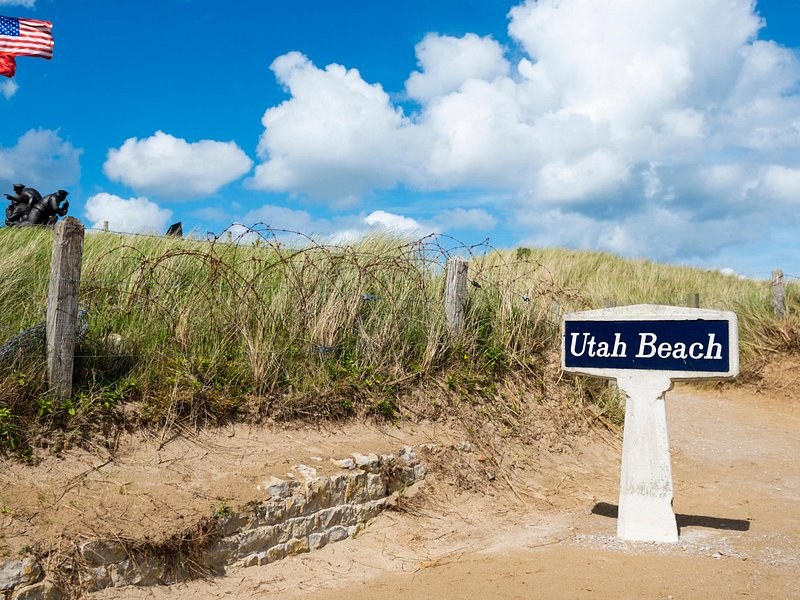
Utah Beach is the landing furthest west. The U.S. 4th Infantry Division landed
here and pushed quickly inland. It heads UNESCO's list of the five beaches, going west to
east.
The Utah Beach D-Day Museum stands on the site. An adult ticket costs €10, and a child of
6 to 15 pays €6.50. It opens every day, 9:30 am to 7 pm from May to September. Allow about
an hour and a half to two hours if you go on your own.
A white Utah Beach marker in the dune grass above the sand
If you book a coach day from Paris, the museum ticket is in the fare on the City Wonders days.
The full days from Bayeux also stop on the beach itself. Some put the museum on the itinerary
without naming a ticket, so ask when you book.
Pointe du Hoc: the Rangers' cliff
Pointe du Hoc is a headland about seven miles west of the Normandy American Cemetery. On
6 June, the U.S. 2nd Ranger Battalion, under Lt. Col. James E. Rudder, climbed its 100-foot
cliffs. The big guns had been moved inland, and the Rangers found and destroyed them. When they
were relieved two days later, only about 90 Rangers still stood.
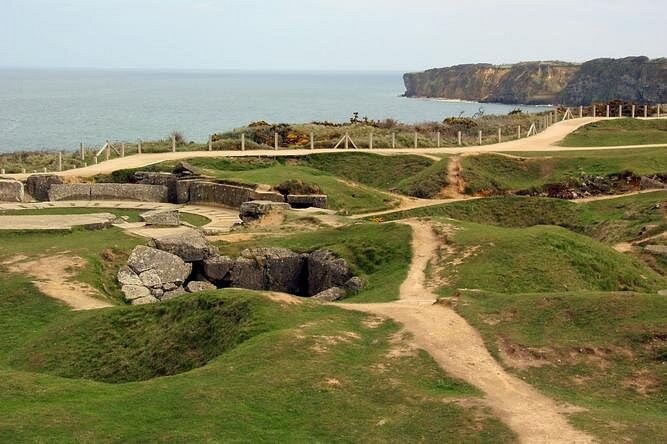
You walk among the craters the bombardment left, and past German bunkers. The naval shelling
began at 5:50 am, and most Rangers were on top by 7:40. The site is free and needs no
booking.
Craters and broken bunkers on a clifftop, the coast running away to the west
What is open during the 2026-27 works
The site is being restored over 18 months from February 2026. The visitor center has been
closed since 9 March 2026, with a welcome point by the temporary car park instead. Since
mid-May, you reach the historic site by the west path only, and some paths and bunkers are shut.
The granite monument and its "books" were lifted into storage on
17 June 2026, to return on a new memorial plaza.
Hours stay 9 am to 5 pm, daily. The site is not wheelchair accessible during the works, and
parking is limited. If your guide finds it shut on the day, some Bayeux days swap in the
Longues-sur-Mer battery instead.
Omaha Beach and the American Cemetery
Omaha Beach was the hardest landing of the five. The U.S. 1st and 29th Infantry Divisions came
ashore under heavy German fire, with up to 200 yards of open sand to cross and steep bluffs
beyond. American forces suffered over 4,000 casualties here.
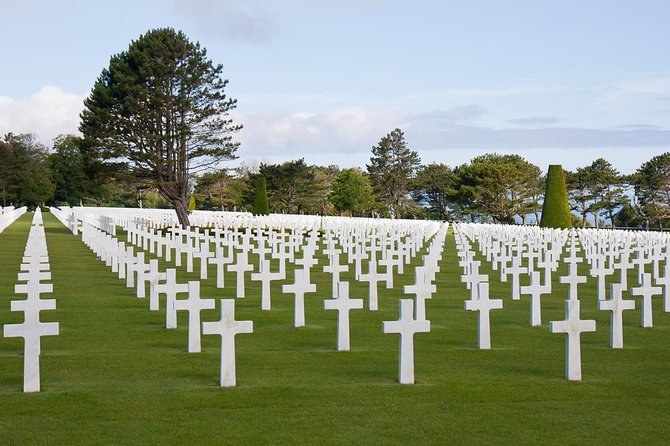
The Normandy American Cemetery sits on the bluff above the beach at Colleville-sur-Mer. It
began as the St. Laurent cemetery on 8 June 1944, the first American cemetery of the war on
European soil. Today it holds 9,389 graves on 172.5 acres. The Walls of the Missing carry 1,557
names.
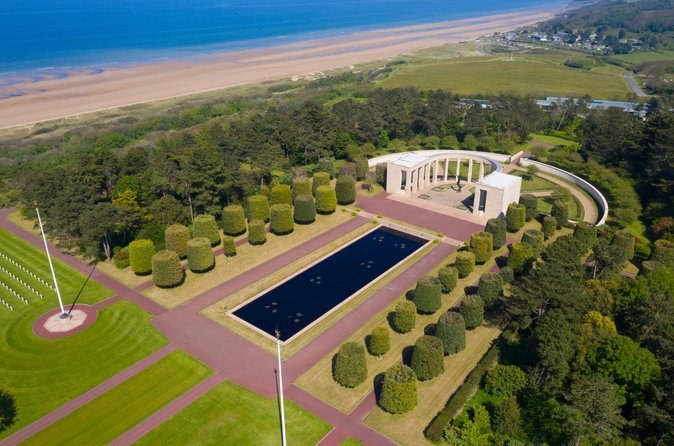
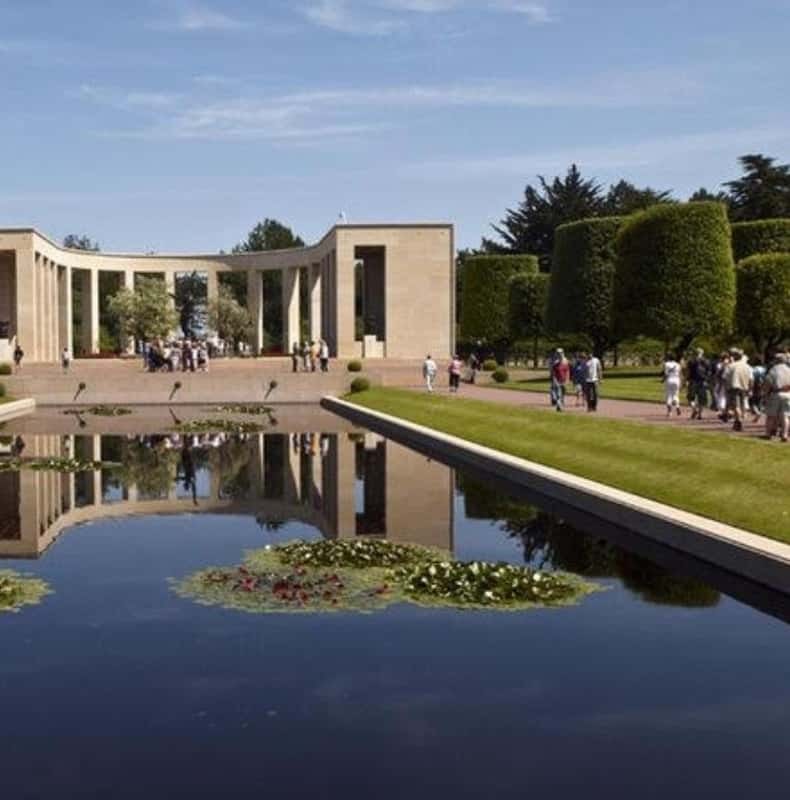
The memorial, its reflecting pool and clipped trees above the long sand of Omaha Beach
You will find a memorial colonnade, the bronze "Spirit of American Youth Rising from the Waves",
a reflecting pool and a chapel. An orientation table looks out over the beach. The visitor
center opened on 6 June 2007, about 100 m east of the Garden of the Missing.
Hours, free tours and the 2026 plot closure
The cemetery opens 9 am to 5 pm every day except 25 December and 1 January. Entry is free,
with no booking, and admission ends 30 minutes before closing. The flag is lowered an hour
before closing.
On 28 July 2026, the cemetery closed all its grave plots for now, because of drought water
limits. The visitor center, the memorial, the chapel and the Garden of the Missing stay open.
If you have a relative buried here, contact the staff before your visit or when you arrive.
Check the cemetery's page before you go.
The path from the cemetery down to the beach has been closed since 2016. You reach the sand by
the public access nearby. The Overlord Museum stands 500 m from the cemetery, and some Paris days
put its ticket in the fare.
Want the American sites in one day?
Compare the D-Day days that start in Normandy, with Pointe du Hoc, Omaha Beach and the cemetery on each.
Gold Beach was one of the British landings. On Gold, Juno and Sword, British and Canadian
divisions forced their way inland. Within a week, the Allies had linked their beachheads.
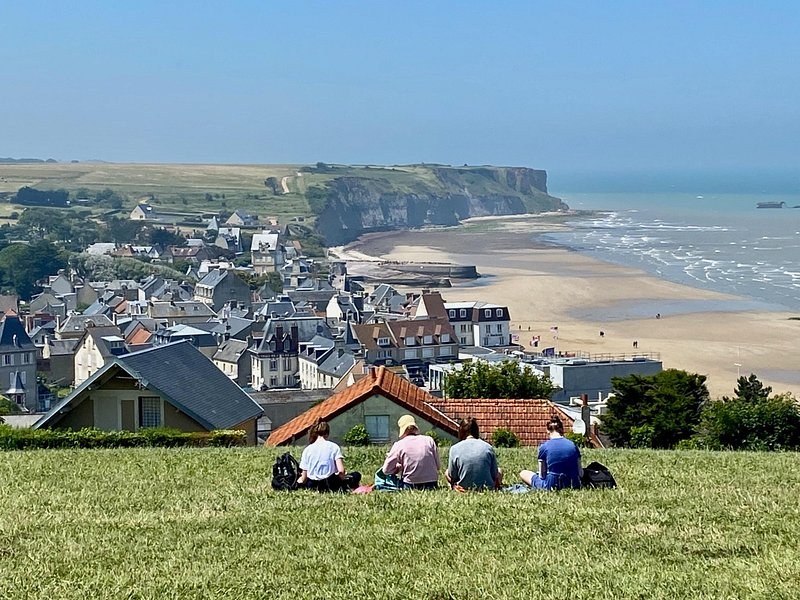
Arromanches sits on this stretch of coast. Off its beach you can still see the remains of
Mulberry B, the floating harbour towed across the Channel to land supplies. UNESCO names it as
one of the listing's key remains.
Arromanches and its long beach seen from the hill above the town
The Musée du Débarquement in Arromanches opened in 1954 as the first museum of the landings.
It moved to a new building in 2023. An adult ticket costs €12.90, and a visit takes about an
hour and a half. It closes in January.
Juno Beach: the Canadian landing
Juno Beach is where the Canadians came ashore, at Courseulles-sur-Mer. The Juno Beach Centre,
Canada's Second World War museum, opened behind the beach in 2003. It remembers the 45,000
Canadians who died in the war, 5,500 of them in the Battle of Normandy and 381 on D-Day.
A museum ticket is €9 in 2026, or €13.50 with the guided tour of the bunkers. The
centre closes in January. From May to August it opens 9:30 am to 7 pm.
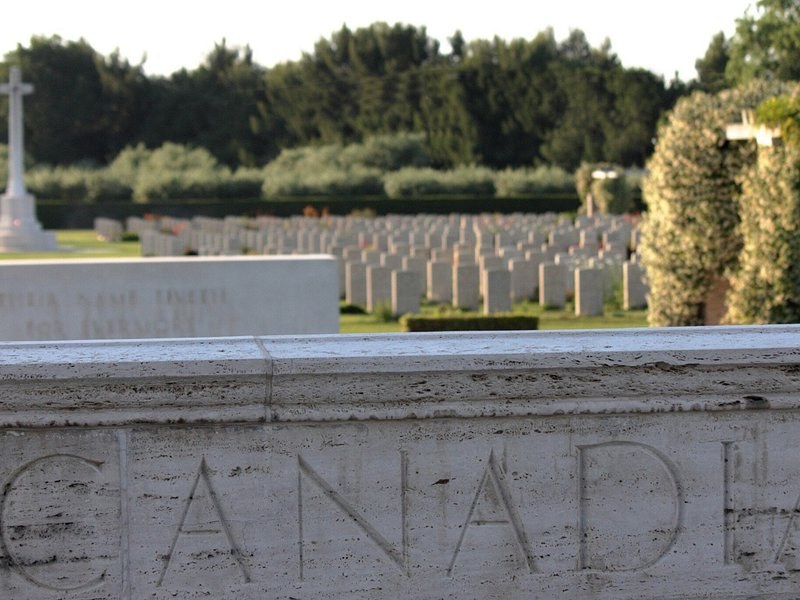
Rows of headstones in a Canadian war cemetery behind a wall carved with the word Canada
If you want the Canadian story, the Canadian day from Paris spends its Normandy hours here.
It adds the Canadian war cemetery at Bény-sur-Mer and the Abbaye d'Ardenne, with the entrance
fees in the fare.
Sword Beach: the eastern end
Sword Beach is the easternmost of the five landing beaches. British forces landed here, and
it is the last of the six sites on the UNESCO listing as you go east.
Most D-Day days from Bayeux and Paris spend their time in the American sector further west,
so Sword Beach is rarely a stop. If you want it, a private day lets you set your own route
along the coast.
Which beaches the tours reach
Use this table to match a beach to a kind of day. The last column comes from each tour's own
itinerary.
Site, west to east
Who landed on 6 June 1944
What you find there today
Which days reach it
Utah Beach
U.S. 4th Infantry Division
The Utah Beach Museum on the sand
Full days from Bayeux; the coach days from Paris, with the museum in the fare
Pointe du Hoc
U.S. 2nd Ranger Battalion, up 100-foot cliffs
Craters and bunkers; west path only during the 2026-27 works
Most American-sector days
Omaha Beach
U.S. 1st and 29th Infantry Divisions
The American Cemetery on the bluff above; the Overlord Museum 500 m from it
Almost every D-Day day
Gold Beach
British divisions
Arromanches and the remains of Mulberry B
The train day from Paris and the private VIP day
Juno Beach
Canadian divisions
The Juno Beach Centre at Courseulles-sur-Mer
The Canadian day from Paris
Sword Beach
British divisions
The eastern end of the listed coast
Not a stop on the shared days
If you want to see more than one sector, a private day gives you the widest choice. A shared
day from Bayeux gives you the most time in the American sector.
Questions about the beaches
Which D-Day beaches do the tours visit?
Almost all of them cover the American sector: Omaha Beach, Pointe du Hoc and the cemetery, with Utah Beach and Sainte-Mère-Église on the full days. The Canadian day goes to Juno Beach, and some Paris days add Arromanches on the British side.
Which D-Day beach is best to visit?
For a first visit, Omaha Beach with the American Cemetery above it and Pointe du Hoc nearby. They sit close together, and almost every D-Day day covers them. If your family history is Canadian, Juno Beach is the one to see.
How far apart are the D-Day beaches?
The six sites spread along about 80 km of coast, by UNESCO's measure. Pointe du Hoc is about seven miles west of the Normandy American Cemetery, so a full day links the American sites easily.
Can you walk on the D-Day beaches?
Yes. The beaches are open shore, with no gate and no ticket. The path from the American Cemetery down to Omaha Beach has been closed since 2016, so use the public beach access nearby.
How many graves are in the Normandy American Cemetery?
The Normandy American Cemetery holds 9,389 graves on 172.5 acres, and the Walls of the Missing carry 1,557 names. So the "10,000 white crosses" one listing mentions is not the count: it rounds the graves up.
What happens if Pointe du Hoc is shut on my tour day?
The Ophorus days from Bayeux say they will swap in the Longues-sur-Mer battery, and the Blue Fox days from Paris already stop there. On any other tour, ask your operator.
When did the D-Day beaches become World Heritage?
In 2026. UNESCO listed the five beaches and Pointe du Hoc as one serial property, number 1581. The listing also names Mulberry B and the cemetery at Colleville-sur-Mer.
Where these facts come from
The history, the numbers and the hours come from UNESCO, the American Battle Monuments
Commission and each museum's own page, checked 28 September 2026. Which tour reaches which beach comes from each
tour's own itinerary.
Eight and a half hours from Place du Québec through the American sector: the paratroopers' village, Utah Beach with a lunch stop, the Rangers' cliff, Omaha Beach and one last landing beach. Ten seats at most.
Thirteen hours from Paris to Canada's beach: its museum with entrance fees paid, the Canadian war cemetery at Bény-sur-Mer and the Abbaye d'Ardenne. Eight seats.
The train from Paris to Bayeux with the rail tickets in the fare, then short guided stops along the coast from Utah to Arromanches. Final sale; ages 14 and over.