D-Day Facts from the Normandy Coast That Will Surprise You
The short answer. The landings began at 6:30 am, the guns the Rangers climbed a cliff to silence were not where anyone expected, a whole harbour was towed across the Channel, and the first American cemetery in Europe opened two days after the landings. These facts come from the sites' own custodians, and each changes what you look at on the ground. Every Normandy tour passes most of these places.
The landings began at half past six
Before dawn on 6 June 1944, the US 82nd and 101st Airborne Divisions and the British 6th Airborne Division landed by parachute and glider behind the coast. From 6:30 am, six US, British and Canadian divisions came ashore on five beaches, from Utah in the west to Sword Beach in the east. When you stand on Utah Beach, you are at the western end of a front that ran about 80 km, and your guide will usually start the story there.
Five beaches, and one of them cost far more
At Utah, the US 4th Infantry Division pushed inland quickly. At Omaha, the 1st and 29th Infantry Divisions met heavy German resistance, open ground up to 200 yards wide and steep bluffs behind it. American forces suffered over 4,000 casualties on Omaha Beach, the bloodiest of the five. You feel the difference on the ground, where Omaha's steep bluffs still rise behind the sand.
A 100-foot cliff, and guns that had gone
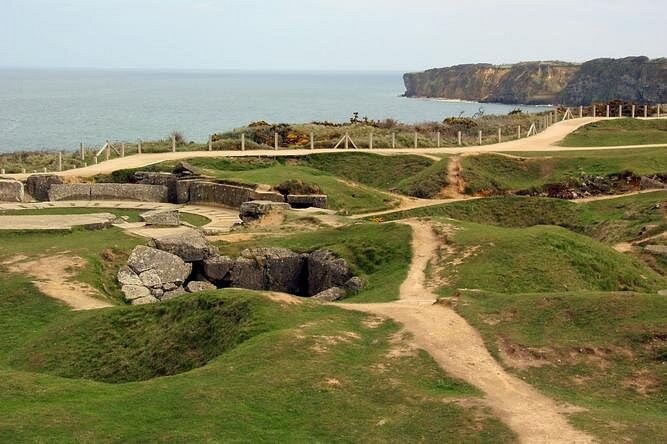
At Pointe du Hoc, the US 2nd Ranger Battalion under Lieutenant Colonel James E. Rudder scaled 100-foot cliffs to reach the German gun positions. The naval bombardment began at 5:50 am, and most Rangers were on top by 7:40. The guns had been moved inland. The Rangers found them and destroyed them, and when they were relieved after two days, only about 90 were still standing.
The cliff has been in American care since 1979
Pointe du Hoc was transferred to the American Battle Monuments Commission on 11 January 1979. Its French-built granite pylon, set on a German bunker, was lifted into storage by crane on 17 June 2026, to be re-set on a new memorial plaza built during the works. Until they end in mid-2027, you reach the site by the west path only.
A harbour that crossed the Channel
At Arromanches the Allies built an artificial port, Mulberry B, with floating piers to unload ships day and night. Building the Mulberry harbour took 600 businesses and 50,000 people, working in secret. Its remains still lie off the beach, where you can see them from the town, and they are one of the attributes UNESCO names for the World Heritage listing.
The first American cemetery in Europe opened on 8 June
Two days after the landings, the US First Army opened a temporary burial ground at St. Laurent. It became the first American cemetery on European soil in the Second World War, and its site is now the Normandy American Cemetery. It holds 9,389 graves, including three Medal of Honor recipients and 45 pairs of brothers buried side by side. See the zone-by-zone guide before you go.
Names come back from the missing
The Walls of the Missing at the cemetery carry 1,557 names. Some now have a small rosette beside them. Each rosette marks a man whose remains have since been recovered and identified, decades after the name was carved. It is the detail almost nobody notices, so look for it when you reach the wall.
Guns still in their casemates
At Longues-sur-Mer, part of the German Atlantic Wall, four casemates still hold their original guns. Entry is free all year, and the visit takes about 30 minutes. When the Rangers' cliff is shut during the works, some Bayeux days send you here instead; things to do has the details.
Canada's beach, and Canada's cost
Canadian troops landed at Juno. According to the Juno Beach Centre, which opened in 2003 as Canada's Second World War museum, 381 Canadians died on D-Day, 5,500 in the Battle of Normandy and 45,000 in the whole war. If you go, the museum costs you €9, and it is closed in January. If the Canadian beach is the reason for your trip, where to stay weighs Caen and the coast as a base.
A German cemetery on the American sector
Inland from the coast, on the old RN 13 road at La Cambe, the German military cemetery was inaugurated on 21 September 1961. A Garden of Peace holds 1,220 maples, and an exhibition opened in 2019 on war crimes, individual responsibility and remembrance. Entry is free, and you will find that some days from Bayeux and Le Havre stop here.
The first museum of the landings is older than the cemetery
The museum you pass at Arromanches opened on 5 June 1954, two years before the American cemetery was dedicated, as the first museum of the landings. It moved into a new building in 2023, and the harbour remains are visible from outside.
The beaches joined the World Heritage List in 2026
UNESCO inscribed the Beaches of the D-Day Landings, Normandy, 1944 in 2026, as a single property in six parts along about 80 km of coast: Utah, Omaha, Gold, Juno and Sword, and the cliff at the Pointe. UNESCO's text notes that seventeen Allied nations worked together on the operation. The six parts, west to east:
- Utah Beach, American, the western end of the landings.
- Pointe du Hoc, the Rangers' cliff, counted as the sixth assault site.
- Omaha Beach, the costliest landing.
- Gold Beach, British, with the harbour remains at Arromanches.
- Juno Beach, Canadian.
- Sword Beach, British, the eastern end of the landings.
The division from Utah Beach helped free Paris
The US 4th Infantry Division, the first ashore at Utah on 6 June, fought across Normandy all summer. After the breakout near St-Lô on 25 July and the Falaise Pocket in August, Paris was liberated on 25 August 1944 by the French 2nd Armored Division and the same US 4th Infantry Division. If you take a day from Paris, you travel the route in reverse.
Where the facts fit on the ground
| Fact | Where you see it | Cost |
|---|---|---|
| The 6:30 am landings | Any of the five beaches | Free |
| The Rangers' climb | The cliff at the Pointe, west path only in 2026 | Free |
| The rosettes | The Walls of the Missing, Colleville | Free |
| The towed harbour | Arromanches and its museum | Museum €12.90 |
| The original guns | The German battery at Longues | Free |
| Canada's losses | The Canadian museum at Courseulles | €9 |
For the full visit plan, read how to visit the beaches; to decide on a start town, read the Paris or Bayeux comparison. The visitor guide lists every museum price.
Days that stop where these facts happened
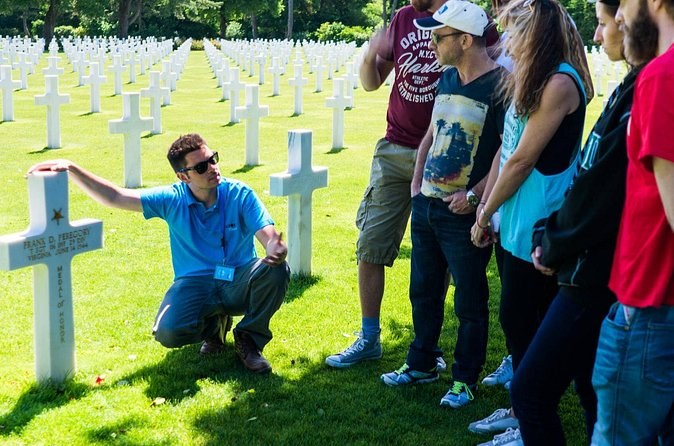
Normandy D-Day Small-Group Day Trip with Omaha Beach, Cemetery & Cider Tasting
Twelve to thirteen hours from avenue de Wagram, eight people at most: the Colleville museum ticket, the German battery, the cliff, the cemetery and a cider tasting.
From $307 per person
Check Availability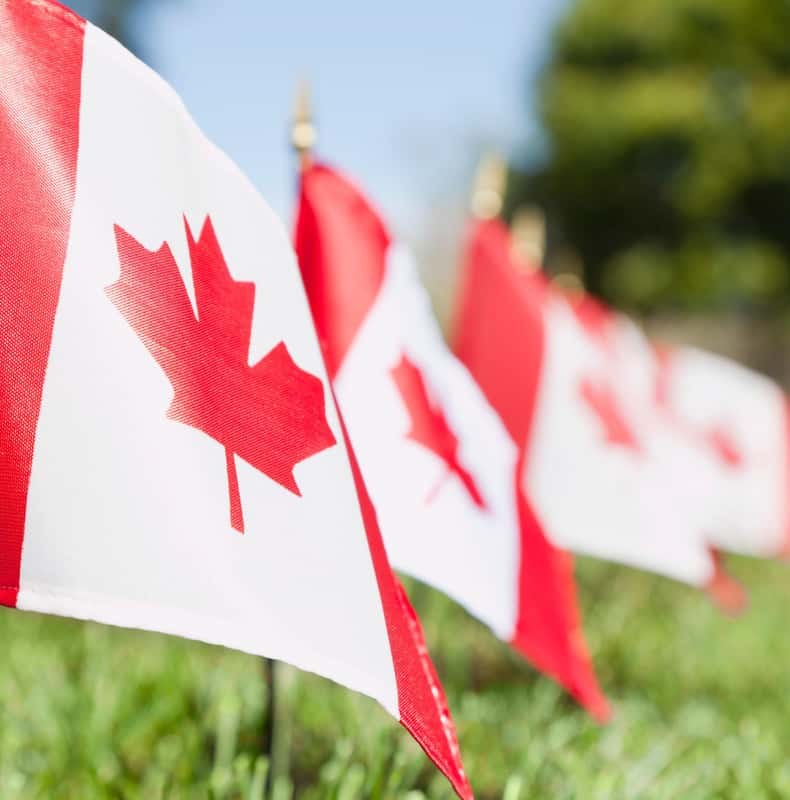
Small-Group Canadian Normandy D-Day Juno Beach from Paris
Thirteen hours from Paris to the Canadian beach: its museum with entrance fees paid, the Canadian cemetery at Bény-sur-Mer and the Abbaye d'Ardenne. Eight seats.
From $273 per person
Check Availability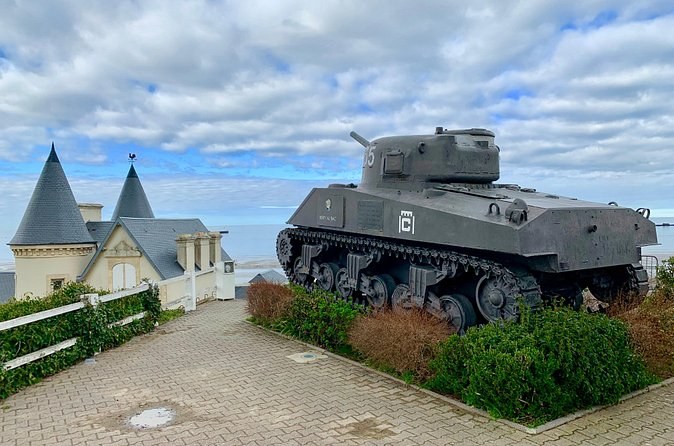
Normandy Battlefields D-Day Private Trip with VIP Services from Paris
A private day from your Paris address on a route you can change, with time at Arromanches and the harbour remains. Wheelchair accessible.
From $928 per person
Check AvailabilityNext: Pick the two or three facts that matter most to you, and book the day that stops there. Every fare sits side by side on Normandy Tours.